 Baby Sleep


 The short answer

1Wake windows change as babies grow
A newborn may need sleep again after a short period awake, while an older baby can usually handle longer stretches. The challenge is that growth spurts, regressions, illness, and short naps can change the right timing.
Because wake windows change gradually, parents often need both age guidance and recent history. Yesterday’s pattern may matter more than a chart when your baby is going through a transition.

2The previous nap matters
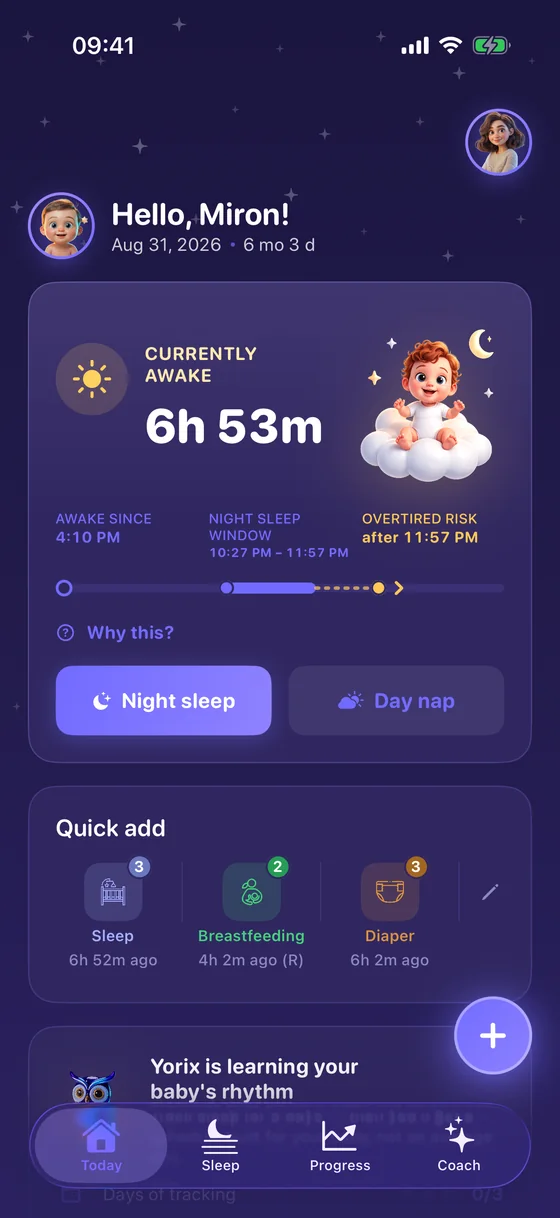
A long restorative nap may support a longer wake window. A short nap often means the next sleep time should come sooner. Yorix studies nap length and daily rhythm before suggesting the next sleep window.
This is one of the most useful parts of adaptive scheduling: the plan changes because the day changed, not because the parent failed to follow the plan.

3Bedtime is part of the same pattern
When wake windows stretch too far late in the day, bedtime can become harder. A flexible schedule helps parents move bedtime earlier after missed naps instead of waiting for a fixed time on the clock.
A good bedtime plan protects the evening by responding to the whole day. If naps were short, bedtime may need to come earlier. If naps were strong, the evening may feel smoother.

4Use cues with the timer
Wake windows are guides, not commands. Rubbing eyes, zoning out, fussiness, and reduced engagement can all help parents decide whether to begin the wind-down.
Yorix gives the timing context so those cues become easier to interpret.

Quick reference
Newborn
Very short windows
Follow sleepy cues closely
4-6 months
Growing windows
Nap rhythm starts to emerge
7-12 months
Longer awake time
Transitions can affect bedtime
Toddler
One main nap
Evenings depend on nap quality


Example day
Morning
Wake and first feed
The real wake-up time, not yesterday’s plan
Starts the day from the actual log.
Nap 1
First sleep window
Sleep cues and how quickly baby settles
Learns whether the first window is too short or too long.
Midday
Second nap and feeds
Total daytime sleep and feeding rhythm
Connects naps and feeds in one timeline.
Afternoon
Final nap decision
Risk of a too-late nap
Suggests a shorter nap or earlier bedtime when needed.
Evening
Bedtime anchor
Settling time and overnight waking
Shows how the day affected the night.
 Starts the day from the actual log.
Common challenges
The final nap keeps pushing bedtime late.
 The final nap keeps pushing bedtime late.
- Likely reason
- The baby may be ready for a transition or a capped last nap.
- Try first
- Shorten the final nap or protect an earlier bedtime.
- How to check
- Compare bedtime settling for 3 evenings.
Baby seems tired before the suggested time.
- Likely reason
- Previous nap quality, illness, feeding, or stimulation may have shortened tolerance.
- Try first
- Start wind-down earlier and keep the room calm.
- How to check
- Track whether settling is easier.
Plan for today
- 1
Track wake time from the end of the last nap.
- 2
Shorten the next window after a short nap.
- 3
Use sleepy cues alongside the timer.
- 4
Keep bedtime flexible when the day goes off plan.
Quick routine checklist
Common questions
Are wake windows more important than nap times?
For many babies, wake windows are more useful than fixed nap times, especially before a stable daily schedule develops.
What happens if a wake window is too long?
Some babies become overtired, making naps or bedtime harder. A shorter next window or earlier bedtime may help after a stretched day.
 Turn insights into better days