 Baby Sleep


 The short answer


1Keep expectations soft in the newborn stage
Newborn sleep can look irregular. Some naps are long, some are tiny, and feeding needs can shift from day to day. Instead of chasing a perfect timetable, it is more useful to track what actually happened and build a calm rhythm from that information.
Parents often feel pressure to create a schedule early. In reality, newborn routines are usually built from repeated care moments: feeding, changing, short awake time, soothing, and sleep.

2Connect sleep and feeding notes
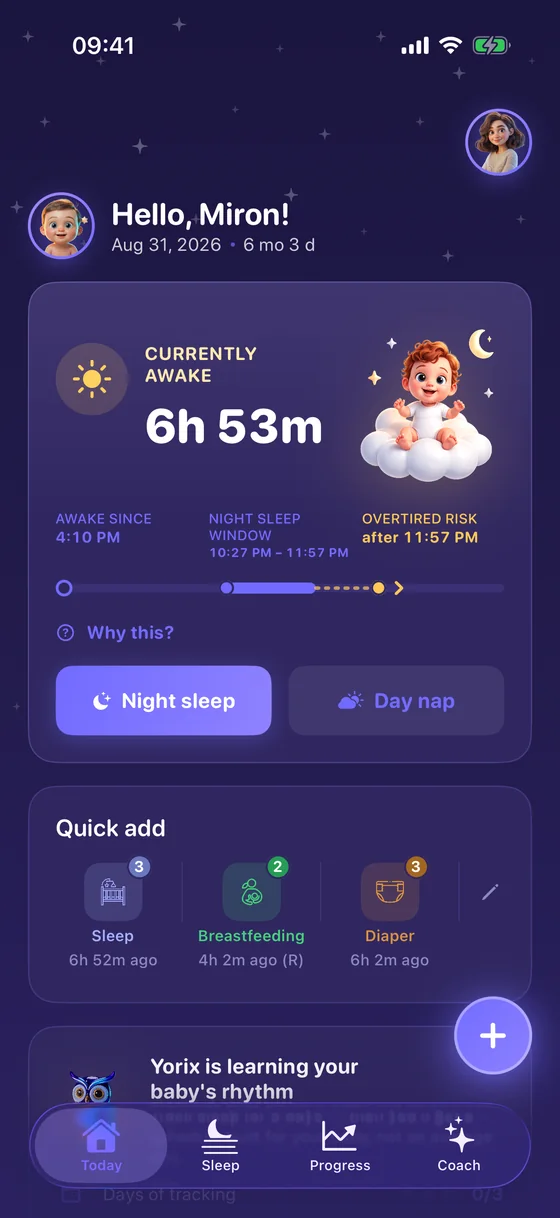
Many parents understand the day better when sleep, feeds, diapers, and mood sit in one timeline. Yorix keeps those logs together so you can see whether a short nap followed a long wake window, a cluster feed, or an unusual morning.
This is especially useful when two parents or caregivers are sharing nights. The log becomes a shared memory for the day instead of a set of half-remembered times.

3Build day-night cues gently
Morning light, calm evenings, and a repeatable bedtime flow can help a baby begin to recognize the difference between day and night. The routine can stay simple: feed, change, soothe, and sleep.
At night, many families keep lights low, voices quiet, and stimulation minimal. During the day, feeds and wake time can happen in brighter rooms so the rhythm slowly becomes clearer.

4When to use the app
Yorix can be helpful from the beginning because it keeps the basics in one place: sleep, feeding, diapers, mood, growth, and notes. You do not need a strict routine to start tracking.
After a few days, the timeline can show patterns: when sleep tends to fall apart, how feeds line up with naps, and which bedtime flow seems easiest to repeat.

Quick reference
Sleep focus
Frequent naps
Follow cues more than the clock
Wake time
Short and calm
Avoid overtired stretches
Night rhythm
Low stimulation
Keep care simple and quiet
Tracking
Sleep + feeds
Look for patterns, not perfection


Example day
Morning
Light, feed, change
Wakefulness and feeding cues
Keeps sleep, feeds, and diapers together.
Daytime
Short awake period
Early tired cues
Shows how quickly sleep pressure builds.
Afternoon
Flexible naps
Cluster feeds and short sleeps
Helps caregivers see the whole day.
Evening
Simple wind-down
Low light and calmer care
Tracks whether the same routine is easier to repeat.
Night
Quiet care and safe sleep
Feeds, diapers, and safe sleep setup
Preserves a shared night log for both caregivers.
 Keeps sleep, feeds, and diapers together.
Common challenges
Parents cannot remember the last feed or diaper.
 Parents cannot remember the last feed or diaper.
- Likely reason
- Sleep deprivation makes memory unreliable.
- Try first
- Use a simple shared log.
- How to check
- Care handoffs become easier.
The baby seems unusually sleepy or feeds poorly.
- Likely reason
- This can require medical attention depending on context.
- Try first
- Contact a clinician for feeding, growth, or health concerns.
- How to check
- Do not rely on an app for urgent symptoms.
Plan for today
- 1
Track sleep and feeds without trying to force exact times.
- 2
Use short, calm wake periods between naps.
- 3
Keep nights quiet and low-stimulation.
- 4
Ask a clinician about feeding, growth, or health concerns.
Quick routine checklist
Common questions
Can a newborn follow a strict sleep schedule?
Most newborns are not ready for a strict clock-based schedule. A flexible rhythm and consistent care cues are usually more realistic.
Why track newborn sleep if it changes so much?
Tracking helps parents see patterns, share care, and remember feeds or diapers. It is not about making every day identical.