
 Sono do bebé


 A resposta curta



1Comece pelo ritmo real do seu bebé
Uma rotina útil começa pelo que realmente acontece em casa: sestas, janelas de vigília, mamadas, despertares noturnos, fraldas, humor, crescimento, sintomas e a forma como o dia da sua família está organizado. Uma tabela pode dar um ponto de partida, mas é o histórico recente do seu bebé que deve orientar o próximo passo prático.

2Use as orientações por idade sem forçar o relógio
As faixas etárias contam, porque os bebés costumam passar por transições previsíveis no sono e na alimentação. Ainda assim, nenhuma tabela por idade vê a sesta curta de hoje, o sono tardio no carro, a hora de ir buscar à creche, o pico de crescimento ou a luta na hora de deitar. Use o relógio como guia e deixe que os factos do dia ajustem a próxima janela.

3Procure padrões ao longo de vários dias
Uma noite difícil ou uma sesta falhada não chegam para reconstruir toda a rotina. Registe alguns dias, compare o sono total com a última janela de vigília e repare se mamadas, condições do quarto, doença, dentição ou novas competências aparecem perto da mesma perturbação do sono.

4O que os pais muitas vezes entendem mal
Muitos pais pensam que um horário deve tornar todos os dias iguais. O sono real do bebé é mais flexível. Uma boa rotina dá sinais repetíveis, uma ordem previsível e um plano de recuperação depois dos momentos difíceis — não uma regra que ignora a fome, o desenvolvimento ou a segurança.

5Quando mudar o plano
Pense em mudar o plano quando o mesmo problema se repete durante vários dias: adormecer passa a demorar muito mais, a última janela de vigília é regularmente demasiado longa, as sestas falham à mesma hora, os despertares noturnos concentram-se depois de pouco sono diurno ou as mamadas já não acompanham o dia.

6O que registar antes de decidir
Antes de fazer uma grande mudança, anote o essencial: horas de início e fim do sono, janelas de vigília, mamadas, rotina da hora de deitar, despertares noturnos, humor e quaisquer sintomas. Assim, as decisões assentam em padrões e não numa memória exausta.

7Como o Yorix ajuda
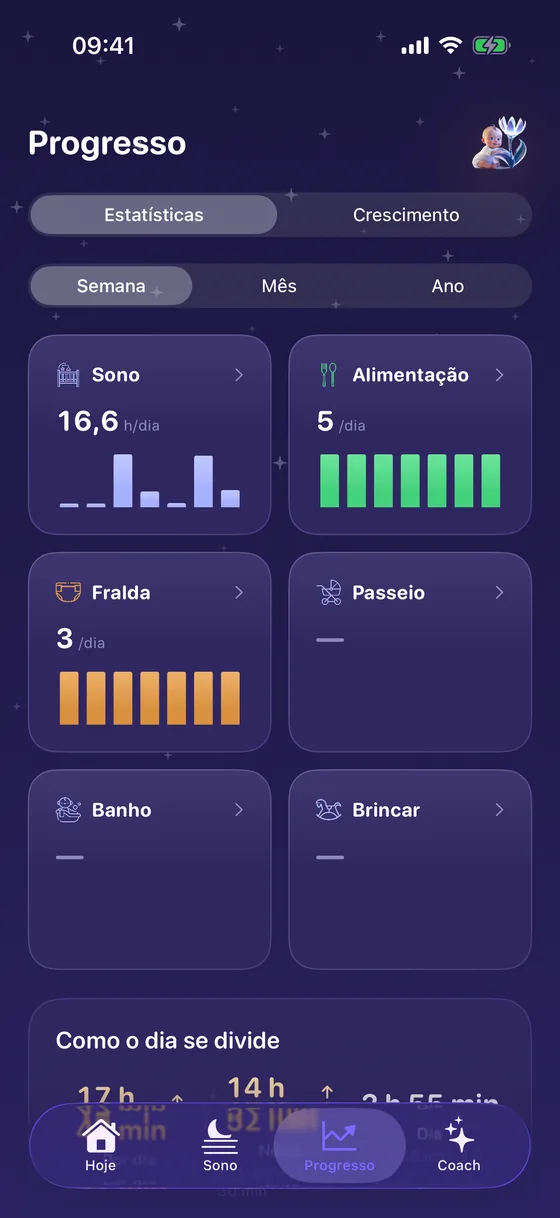
O Yorix reúne sono, alimentação, fraldas, crescimento, sintomas, rotinas e perguntas numa cronologia tranquila. Pode sugerir a próxima janela de sono, explicar porque é que o plano mudou e ajudar os dois cuidadores a seguir o mesmo dia, em vez de adivinharem cada um por si.

Referência rápida
1
Comece com intervalos adequados à idade
Rotina de sono do bebé aos 4 meses
2
Registe sono, mamadas e cuidados em conjunto
Rotina de sono do bebé aos 4 meses
3
Ajuste após sestas curtas ou noites difíceis
Rotina de sono do bebé aos 4 meses
4
Mantenha os sinais da hora de deitar simples e repetíveis
Rotina de sono do bebé aos 4 meses
5
Analise padrões ao longo de vários dias
Rotina de sono do bebé aos 4 meses
6
Use o Yorix para manter os dois cuidadores em sintonia
Rotina de sono do bebé aos 4 meses
7
Fale com um médico sobre dúvidas de saúde ou segurança
Rotina de sono do bebé aos 4 meses


Desafios comuns
A hora de deitar fica mais difícil depois de uma última sesta tardia.
 A hora de deitar fica mais difícil depois de uma última sesta tardia.
- Causa provável
- A pressão de sono pode estar demasiado baixa ou a última janela pode estar desajustada.
- Experimente primeiro
- Mantenha a hora de deitar habitual e ajuste a última sesta.
- Como verificar
- Observe durante várias noites quanto tempo o bebé demora a adormecer.
Os despertares noturnos aumentam de repente.
- Causa provável
- O horário, a alimentação, uma doença, o desenvolvimento ou o ambiente podem ter mudado.
- Experimente primeiro
- Reveja em conjunto o sono, as mamadas, os sintomas e as condições do quarto.
- Como verificar
- Procure o mesmo padrão ao longo de 3–7 dias.
Plano para hoje
- 1
Registe durante vários dias as horas principais de sono e de mamadas.
- 2
Compare a última sesta com a janela de vigília seguinte.
- 3
Antecipe a hora de deitar depois de um dia de cansaço excessivo.
- 4
Mantenha o ambiente de sono seguro e familiar.
- 5
Evite mudar tudo depois de uma má noite.
- 6
Partilhe a mesma cronologia com todos os cuidadores.
Checklist rápida da rotina
Como o Yorix ajuda nesta rotina
O Yorix transforma os registos do dia a dia num plano diário mais claro, para que os pais vejam o que mudou e o que experimentar a seguir.
Em vez de saltar entre notas, memória, tabelas e pesquisas a altas horas, pode manter o ritmo de sono e de cuidados do bebé numa só app.
Perguntas frequentes
Devo seguir um horário rígido?
Um horário rígido pode aumentar a pressão. A maioria das famílias dá-se melhor com um ritmo estável que, ainda assim, se adapta à duração das sestas, às mamadas, à saúde, às viagens e ao desenvolvimento.
Quando devo mudar a rotina?
Mude a rotina quando vir o mesmo problema repetir-se ao longo de vários dias, ou quando a idade, a alimentação, uma doença, a creche ou uma transição de sono mudam claramente o dia.
Quantos dias devo registar antes de decidir?
Três a sete dias costumam chegar para ver um padrão útil na rotina, a menos que haja uma questão de saúde ou segurança que precise de atenção profissional mais rápida.
Uma app pode substituir o aconselhamento médico?
Não. O Yorix ajuda a registar e planear a rotina, mas não diagnostica problemas médicos nem substitui o aconselhamento de um profissional de saúde qualificado.
 Transforme observações em dias melhores