 Feeding


 The short answer

1Track feeding without turning it into pressure
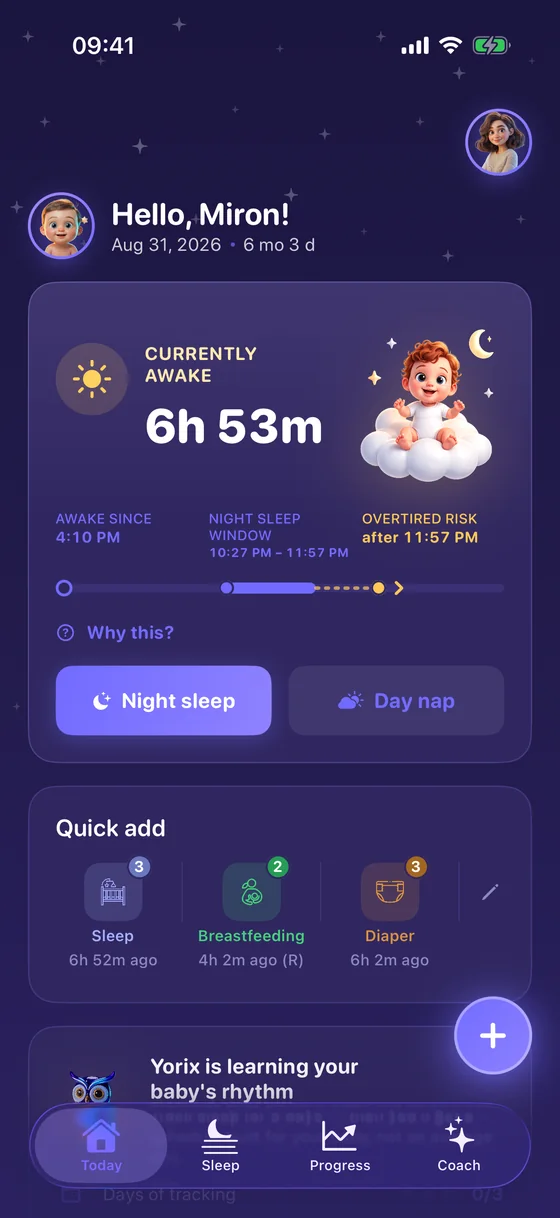
A log can help you remember the last breastfeeding session, bottle, pumping time, or feed amount. It should support the parent, not create anxiety. Yorix keeps feeding history simple and easy to review.
For tired parents, the value is often practical: which side did we start on, when was the last bottle, how long has it been, and what happened before the next nap?

2Look at feeds and naps together
Some difficult naps happen after a long wake window, while others may connect to hunger, digestion, or an unusually busy day. Seeing sleep and feeds in one timeline makes those patterns easier to notice.
A combined timeline can also make handoffs easier. If one parent slept, the other parent can still see the night without asking for every detail.

3Keep health questions separate from tracking
Tracking can help you prepare better questions for a clinician, but it does not replace medical advice. If you are concerned about feeding, weight, hydration, or symptoms, speak with a qualified professional.
Yorix is built as a routine and care log. It helps organize information, but medical decisions should stay with qualified clinicians.

4Use feeding history for calmer planning
When feeding and sleep live together, parents can notice whether certain routines lead to smoother naps or easier bedtimes. The goal is clarity, not perfection.
Over time, daily summaries and weekly patterns can show whether the schedule is becoming more predictable.

Quick reference
Breastfeeding
Timer + history
Useful for night feeds
Bottle feeds
Amounts + times
Easy shared-care reference
Pumping
Sessions logged
Keep supply notes organized
Diapers
Context with feeds
Helpful for care discussions


Example day
Morning
Breastfeeding
Useful for night feeds
Uses timer + history as context for the next plan.
First nap
Bottle feeds
Easy shared-care reference
Uses amounts + times as context for the next plan.
Midday
Pumping
Keep supply notes organized
Uses sessions logged as context for the next plan.
Evening
Diapers
Helpful for care discussions
Uses context with feeds as context for the next plan.

Common challenges
Bedtime becomes harder after a late final nap.
 Bedtime becomes harder after a late final nap.
- Likely reason
- Sleep pressure may be too low or the last window may be off.
- Try first
- Protect the bedtime anchor and adjust the final nap.
- How to check
- Watch bedtime settling time for several evenings.
Night wakings increase suddenly.
- Likely reason
- Schedule, feeding, illness, development, or environment may have changed.
- Try first
- Review sleep, feeds, symptoms, and room conditions together.
- How to check
- Look for the same pattern across 3-7 days.
Plan for today
- 1
Log breastfeeding, bottles, and pumping in one place.
- 2
Track diapers near feeding notes for better context.
- 3
Review daily totals without judging one unusual day.
- 4
Share clear history with a clinician when needed.
Quick routine checklist
Common questions
Should feeding and sleep be tracked in the same app?
For many families, yes. Feeding can affect sleep timing, and a single timeline makes the day easier to understand.
Can tracking become stressful?
It can if every number feels like a judgment. The healthier goal is to use tracking as memory support and pattern recognition.
 Turn insights into better days