 Sleep Training


 The short answer


1Start by naming the problem
A baby who takes 90 minutes to fall asleep may need a different strategy than a baby who wakes every hour and needs the same rocking sequence each time. A baby who is hungry at night needs feeding support, not a behavioral plan.
Before choosing a method, look at age, total sleep, nap timing, last wake window, bedtime routine, feeding, illness, room setup, and how the baby usually falls asleep.

2The main method families compare
Responsive settling means helping the baby calm with voice, touch, holding, rocking, or feeding as appropriate, then gradually giving less help when the baby is ready. Bedtime fading temporarily moves bedtime closer to the time the baby naturally falls asleep, then shifts it earlier.
Camping out or parental-presence fading keeps the parent near the sleep space and reduces presence over time. Graduated extinction uses planned waiting intervals and brief checks. Full extinction removes parental response after bedtime except for safety needs, and many families do not want that approach.

3Age and health boundaries
For the early months, the most appropriate work is routine shaping: light during the day, low stimulation at night, safe sleep, feeding responsiveness, and a bedtime sequence. Structured crying methods are not the starting point for newborns.
For older healthy babies, behavioral methods may be considered when sleep-onset associations or repeated signaled wakings are causing major family distress. Medical concerns, poor growth, breathing problems, fever, feeding difficulty, or parental mental health crisis change the priority.

4Use a plan you can repeat calmly
A sleep plan only works if caregivers can follow it consistently and safely. If a method makes a parent panic, resentful, or unable to sleep at all, it is not a good fit, even if it has a name and a schedule.
Choose the smallest change likely to help. Sometimes that is moving bedtime, protecting naps, adding a routine, or reducing one sleep association gradually rather than changing the whole night at once.

Quick reference
Responsive settling
High parent support
Best fit for younger babies and gentle transitions
Bedtime fading
Clock adjustment
Useful when bedtime is too early for actual sleep pressure
Camping out
Parent stays nearby
Gradual reduction of presence
Graduated extinction
Planned checks
Usually considered for older healthy babies

Example day
Morning
Responsive settling
Best fit for younger babies and gentle transitions
Uses high parent support as context for the next plan.
First nap
Bedtime fading
Useful when bedtime is too early for actual sleep pressure
Uses clock adjustment as context for the next plan.
Midday
Camping out
Gradual reduction of presence
Uses parent stays nearby as context for the next plan.
Evening
Graduated extinction
Usually considered for older healthy babies
Uses planned checks as context for the next plan.

Common challenges
Bedtime becomes harder after a late final nap.
 Bedtime becomes harder after a late final nap.
- Likely reason
- Sleep pressure may be too low or the last window may be off.
- Try first
- Protect the bedtime anchor and adjust the final nap.
- How to check
- Watch bedtime settling time for several evenings.
Night wakings increase suddenly.
- Likely reason
- Schedule, feeding, illness, development, or environment may have changed.
- Try first
- Review sleep, feeds, symptoms, and room conditions together.
- How to check
- Look for the same pattern across 3-7 days.
Plan for today
- 1
Define the exact sleep problem before choosing a method.
- 2
Use safe sleep for every nap and night sleep.
- 3
Pick one change and track it for several nights.
- 4
Reassess if feeding, illness, growth, or stress is part of the picture.
Quick routine checklist
How Yorix helps you choose the smallest useful change
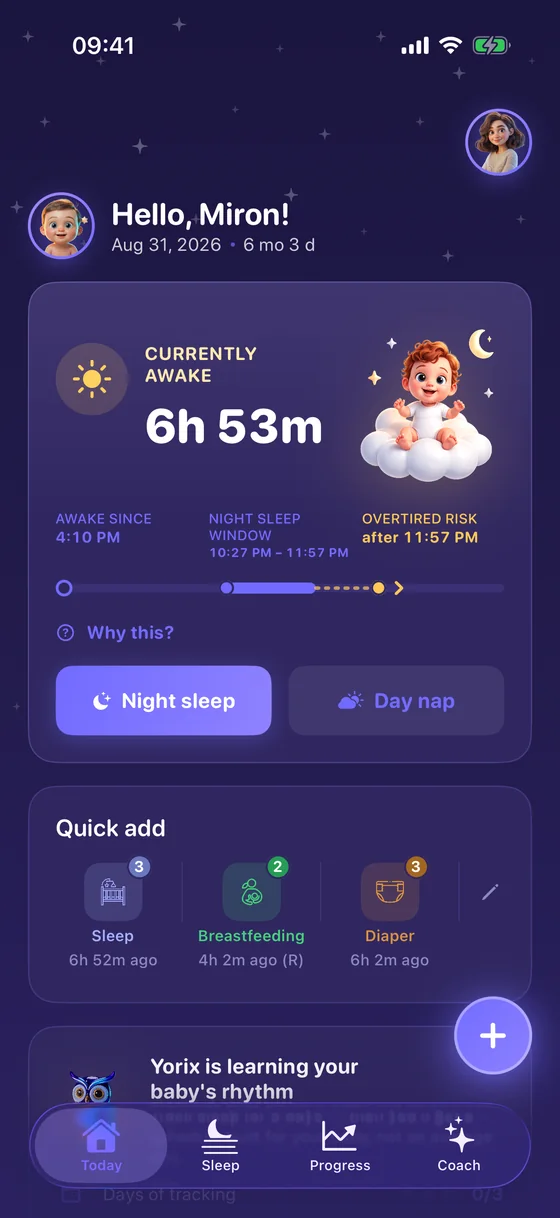
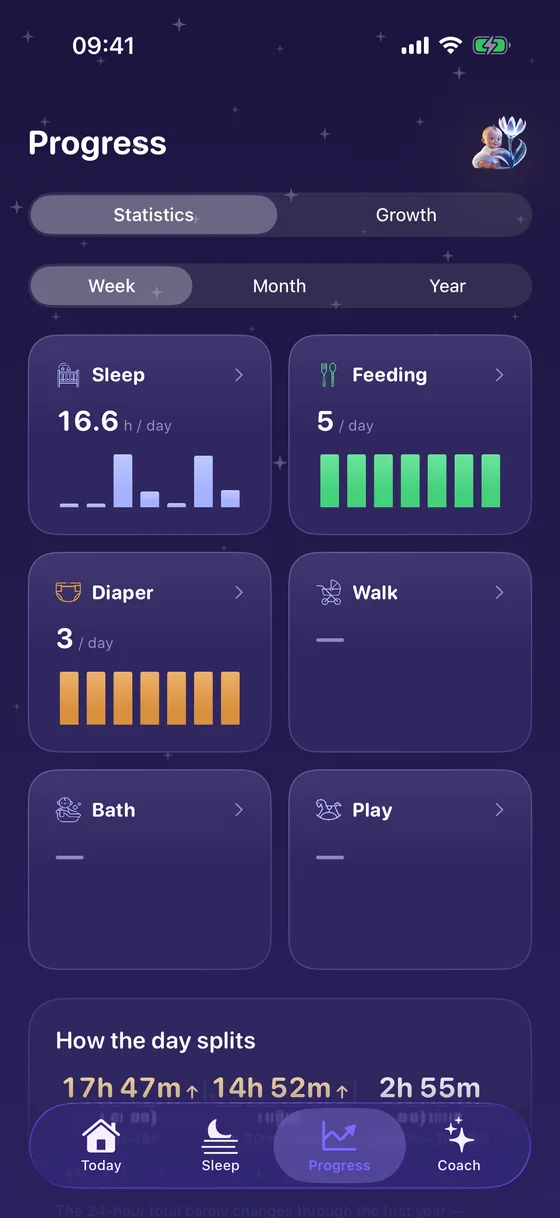
Yorix gives you a clear view of naps, bedtime, wake windows, feeds, and wakings before you choose a method. That helps identify whether timing, hunger, routine, or sleep associations are driving the problem.
The AI sleep coach can turn your logs into practical next steps, while keeping medical and safety boundaries clear.
Common questions
Which sleep training method is best?
There is no universal best method. The right choice depends on age, health, feeding, the actual sleep problem, and what caregivers can carry out calmly.
Does sleep training mean ignoring my baby?
Not necessarily. Many approaches are gradual and parent-present. The phrase sleep training covers very different methods.
 Turn insights into better days