 Baby Sleep


 The short answer


1A two-nap rhythm is common
Many 10-month-olds sleep around 12 to 16 hours per 24 hours, with a practical middle often near 13 to 15 hours. A common pattern is 10 to 12 hours in the night window plus 2 to 3 hours of daytime sleep across two naps.
Wake windows often stretch to roughly 3 to 4 hours, but the exact timing depends on morning wake time, nap length, feeding, daycare, and temperament.

2Development can interrupt sleep
At this age, new motor skills can show up at bedtime. A baby may stand in the crib, practice crawling movements, or wake frustrated because the body is rehearsing new skills.
Separation anxiety also often becomes more visible. The baby understands that a parent can leave, but not always that the parent reliably returns. A predictable goodnight routine and calm brief reassurance can help.

3Protect bedtime from schedule drift
If the second nap ends too late, bedtime may become a battle. If naps are too short, bedtime may need to move earlier. The end of the last nap is often the key piece of the 10-month schedule.
Avoid making bedtime later and later because the baby “does not seem tired.” Overtired babies can look wired, playful, or upset, not only sleepy.

4Check the real cause of wakings
Not every night waking at 10 months is habit. Illness, congestion, ear discomfort, digestive upset, teething pain, travel, and changed daytime feeds can all disturb sleep. If symptoms are present, solve the health issue first.
If the baby is healthy and growing well, repeated wakings may be more about sleep associations, separation, or timing. That is when routine changes can be useful.

Quick reference
Total sleep
12-16 hours
Many babies land around 13-15
Naps
Usually 2
Often morning and afternoon
Wake windows
About 3-4 hours
Adjust after short naps
Common disruptor
Separation anxiety
Keep reassurance calm and predictable


Example day
Morning
Total sleep
Many babies land around 13-15
Uses 12-16 hours as context for the next plan.
First nap
Naps
Often morning and afternoon
Uses usually 2 as context for the next plan.
Midday
Wake windows
Adjust after short naps
Uses about 3-4 hours as context for the next plan.
Evening
Common disruptor
Keep reassurance calm and predictable
Uses separation anxiety as context for the next plan.
Common challenges
Bedtime becomes harder after a late final nap.
 Bedtime becomes harder after a late final nap.
- Likely reason
- Sleep pressure may be too low or the last window may be off.
- Try first
- Protect the bedtime anchor and adjust the final nap.
- How to check
- Watch bedtime settling time for several evenings.
Night wakings increase suddenly.
- Likely reason
- Schedule, feeding, illness, development, or environment may have changed.
- Try first
- Review sleep, feeds, symptoms, and room conditions together.
- How to check
- Look for the same pattern across 3-7 days.
Plan for today
- 1
Track when the second nap ends.
- 2
Use a predictable goodnight routine.
- 3
Offer calm reassurance for separation anxiety.
- 4
Check illness or discomfort before treating wakings as habit.
Quick routine checklist
How Yorix helps at 10 months
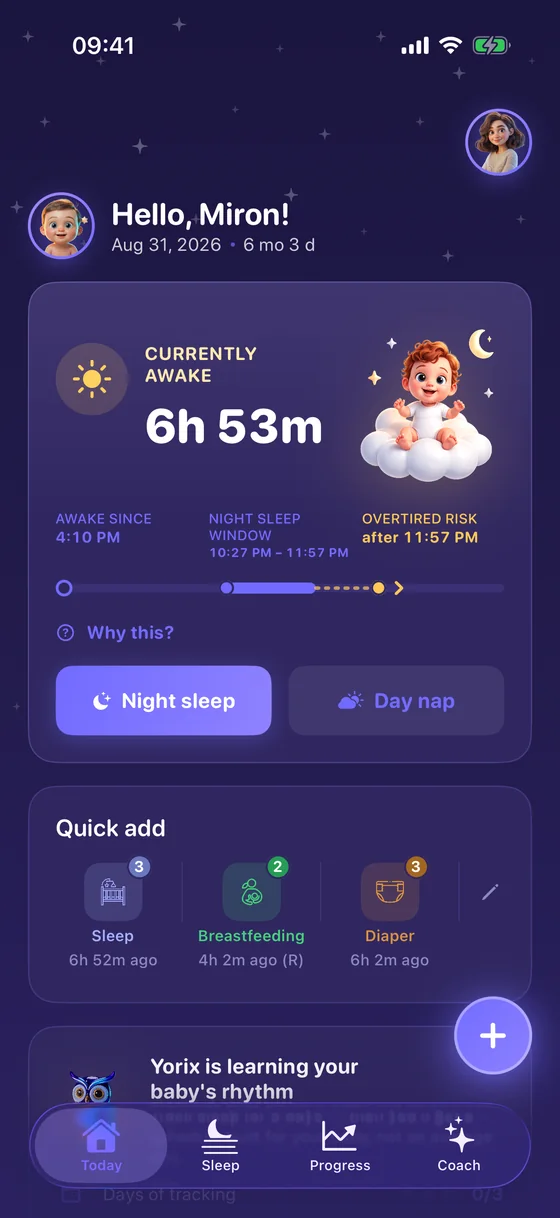
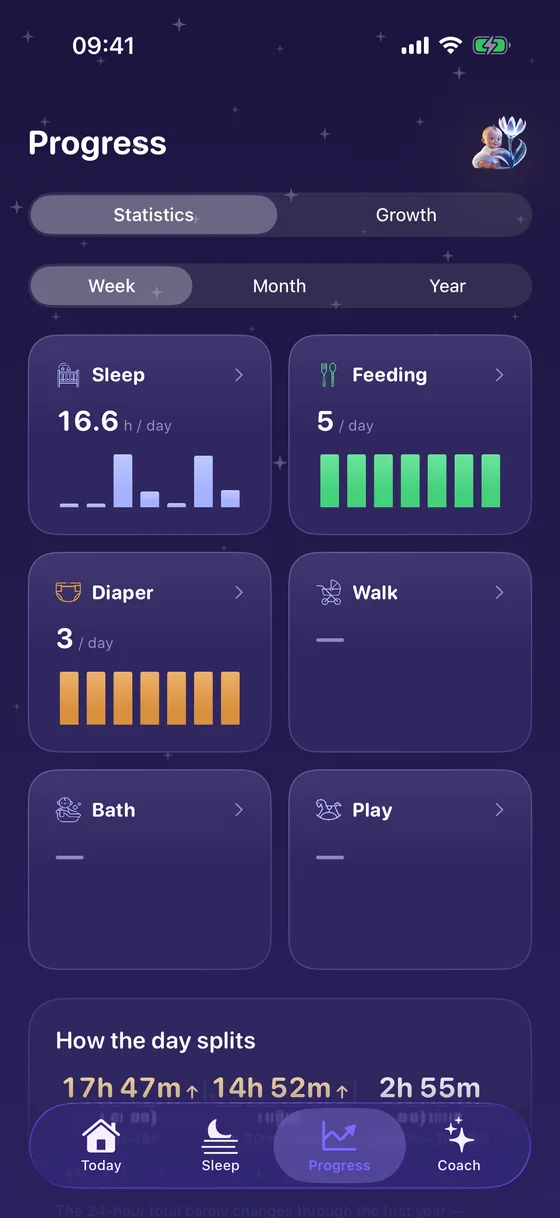
Yorix can show whether late second naps, short naps, longer wake windows, or feeding changes are connected to bedtime battles and night wakings.
The app helps turn a two-nap day into a flexible plan, then updates bedtime when real life changes the schedule.
Common questions
How many naps should a 10-month-old take?
Two naps are common at 10 months, usually with one in the morning and one in the afternoon.
Why did sleep get worse at 10 months?
New skills, separation anxiety, illness, nap timing, and bedtime drift can all cause temporary sleep disruption.
 Turn insights into better days